Nuestra obsesión por el consumo (mientras ignoramos el ahorro y la inversión) es un gran problema
Una entrevista de Juan Fernando Carpio a Hans-Hermann Hoppe realizada en 2018.
Juan Fernando Carpio (JFC): ¿Por qué los economistas en general no enseñan el papel del ahorro para la economía?
Hans-Hermann Hoppe (HHH): Estoy de acuerdo con su evaluación: En la profesión económica actual se presta muy poca atención al papel del ahorro y muchísima, de hecho, una importancia abrumadora, se atribuye por el contrario al papel del consumo. Es una situación muy curiosa. Pues aunque es verdad que el objetivo último de toda la actividad humana es el consumo, solo puede haber poco o ningún consumo sin una producción previa y no puede haber producción sin ahorro previo. Me explico: la naturaleza por sí misma solo nos proporciona muy pocos bienes de consumo, como manzanas creciendo en árboles o bayas en arbustos. Para algo más y por encima de este el nivel dado por la naturaleza de posible consumo, debemos primero producir los bienes que posteriormente podremos consumir. Es decir, primero debemos idear y construir herramientas, instrumentos o máquinas —en términos económicos: bienes de producción indirectamente útiles— que nos ayudan a aumentar el suministro de bienes de consumo dados por la naturaleza (como manzanas y bayas) por encima de su nivel natural o que nos ayudan a conseguir bienes de consumo completamente nuevos, es decir, bienes que no se encuentran en la naturaleza en absoluto (como casas o automóviles). Pero para idear y construir estos bienes de producción (como cuchillos, cubos, redes, martillos, ladrillos, bandejas de acero, etc.) Siempre hace falta algo de tiempo y para pasar el tiempo para completar la construcción de estos bienes, es decir, para comer y beber mientras se trabaja en ellos, son necesarios ahorros previos de alimento y bebida. Sin un ahorro previo y la «inversión» de dicho ahorro y la producción y acumulación de bienes de producción, no sería posible por tanto el aumento del consumo futuro.
Hans-Hermann Hoppe is interviewed by Andrea Venanzoni for the Italian Online Magazine Atlantico. Rivista Di Analisi Politica, Economica e Geopolitica @ atlanticoquotidiano.it
Q: The pandemic and the very often liberticidal, restrictive responses devised by states have led many people to rediscover the value of individual freedom, of natural law, as opposed to positive law. Do you think that the general climate may be conducive to a resurgence of libertarian analyses of society and the shortcomings of the state?
HHH: It is probably useful to briefly sum up what has happened during the last one and a half years and what is still continuing to this day. Never before during peacetime have our liberties been as drastically and severely restricted, ranging from house arrests to curfews, business closures, bans on work, production, travel, movement and association. There were some differences from country to country or region to region as regards the severity of these restrictions, but nowhere was life allowed to go on in its normal way. And all of this was done in the name of protecting the population from a supposedly deadly and highly infectious virus that otherwise, without these restrictions, would allegedly cause a dramatic or even catastrophic increase in the mortality rate.
La incertidumbre y sus exigencias: El papel crítico del seguro en el mercado libre
Este artículo se basa en «The Economics of Risk and Insurance», un discurso realizado por el profesor Hoppe en la Universidad Mises 2004 y 2005.
Un seguro implica la agrupación de riesgos individuales. Bajo este acuerdo, hay ganadores y perdedores. Algunos de los asegurados recibirán más de lo que pagaron en primas y algunos pagarán al sistema más de lo que nunca recuperarán. Es una forma de redistribución de rentas de los sanos a los enfermos, pero lo característico del seguro es que nadie sabe por adelantado quiénes serán los ganadores y los perdedores. Están distribuidos de forma aleatoria e impredecible y la redistribución resultante de rentas dentro de un fondo de gente asegurada es asistemática. [continue reading…]
Prefacio a Contra la izquierda: un libertarismo rothbardiano
Prefacio de Hans-Hermann Hoppe al libro Contra la izquierda: un libertarismo rothbardiano de Llewellyn H. Rockwell Jr.
Cada persona, incluidos los gemelos idénticos, es única, diferente y desigual a todas las demás personas. Todos nacen en un momento y/o lugar diferente. Todos tenemos dos padres biológicos diferentes, mayores y desiguales, un padre masculino y una madre femenina. Cada persona, a lo largo de toda su vida, enfrenta y debe actuar en un entorno diferente y desigual con oportunidades y desafíos diferentes y desiguales, y la vida de cada persona, sus logros y sus fracasos, sus alegrías y satisfacciones tanto como sus decepciones, penas y sufrimientos, entonces, es diferente y desigual a la de todos los demás. Además, esta desigualdad natural de todos y cada uno de los seres humanos todavía se amplifica enormemente con el establecimiento de cualquier sociedad basada en la división del trabajo. [continue reading…]
Publicado en Chronicles, noviembre de 1993, pp. 23-25.
Con el colapso del comunismo por toda Europa del Este, los movimientos secesionistas se encuentran en un proceso de crecimiento vertiginoso. Hoy por hoy existen más de una docena de Estados independientes en los territorios de la antigua Unión Soviética, y muchos de sus más de 100 grupos étnicos, religiosos y lingüísticos diferentes están luchando por ganar la independencia. Yugoslavia se ha disuelto en varias unidades nacionales. Eslovenia, Croacia, Serbia y Bosnia existen hoy como Estados independientes. Los checos y eslovacos se han separado y formado países distintos. Hay alemanes en Polonia, húngaros en Eslovaquia, húngaros, macedonios y albanos en Serbia, alemanes y húngaros en Rumanía, turcos y macedonios en Bulgaria, y todos ellos quieren la independencia. Los sucesos de la Europa del Este también han dado un nuevo impulso secesionista a la Europa Occidental: a los escoceses e irlandeses en el Reino Unido, a los vascos y catalanes en España, a los flamencos en Bélgica, y a los tiroleses y padanos en Italia.
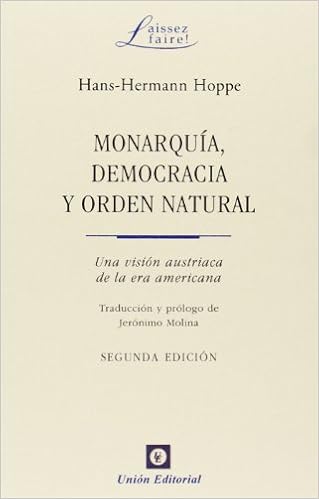
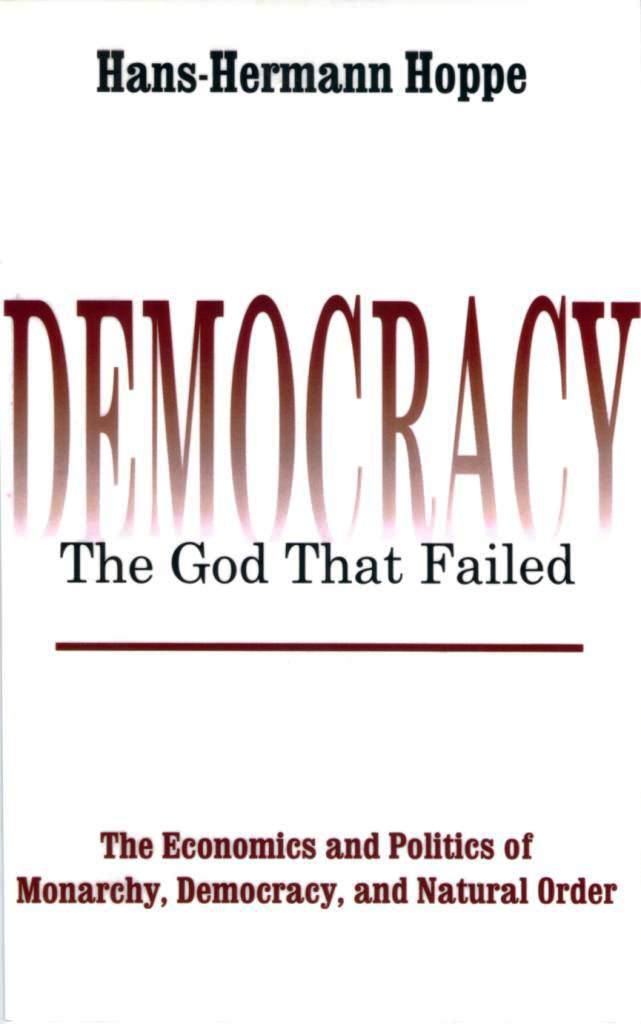
Democracy: The God That Failed is available in a Spanish translation under the title Monarquia, Democracia Y Orden Natural. Una Vision Austriaca de la Era Americana. The book has been translated by Prof. Jeronimo Molina (University of Murcia), who has also written a Spanish introduction.
Juan Fernando Carpio has translated into Spanish Hans-Hermann Hoppe’s Chapter 5 of A Theory of Socialism and Capitalism (1988). The original translation was published before in the book Libertad o Socialismo (2009) without the notes. Oscar Grau has now provided a revised version of it with the newly addition of the notes in Spanish.
Esta es la traducción del capítulo 5 del libro A Theory of Socialism and Capitalism de Hans-Hermann Hoppe.
En los dos capítulos anteriores las formas de socialismo más conocidas e identificadas como tales, y que derivaron básicamente de las mismas fuentes ideológicas, fueron discutidas: el socialismo de tipo ruso, más claramente representado en su momento por los países del bloque comunista de Europa Oriental; y el socialismo de tipo socialdemócrata, con sus representantes más típicos siendo los partidos socialistas y socialdemócratas en Europa Occidental y en menor grado por los «liberals» en Estados Unidos. Las reglas de propiedad subyacentes a sus políticas fueron analizadas y fue planteada la idea de que uno puede aplicar los principios de propiedad del socialismo de tipo ruso o de tipo socialdemócrata en distintos grados: uno puede socializar todos los medios de producción o solo un puñado, uno puede confiscar vía tributos y redistribuir todo el ingreso y casi todos los tipos de ingreso, o uno puede hacerlo en una proporción menor de solo algunas formas de ingresos. Pero, como fue demostrado por medios teóricos y también de forma menos rigurosa a través de evidencia empírica ilustradora, en la medida en que uno se aproxime a estos principios y no abandone de una vez por todas la noción de derechos de propiedad para los no productores (no usuarios) y no contratistas, el resultado será el empobrecimiento relativo.
Este capítulo mostrará que lo mismo es cierto con respecto al conservadurismo, pues este, también, es una forma de socialismo. El conservadurismo también genera pobreza, y mucho más mientras más resueltamente se aplique. Pero antes de adentrarnos en un análisis económico sistemático y detallado de las formas peculiares en que el conservadurismo causa este efecto, sería apropiado darle un breve vistazo a la historia, de forma en que podamos entender mejor por qué el conservadurismo es en efecto socialismo, y cómo se relaciona con las dos formas igualitaristas de socialismo discutidas previamente.
اجازه دهید با نقل قول از مقالهای آغاز کنم که دوست دیرینهی من، رالف رایکو، حدود 15 سال پیش نوشت:
“لودویک فون میزس و افای هایک عموما به عنوان برجستهترین متفکران لیبرال کلاسیک این قرن شناخته شدهاند. آنها همچنین شناختهشدهترین اقتصاددانهای اتریشی هستند. آنها محققاتی عظیم و مردانی بزرگ هستند. من خوششانس بودهام که شاگردی هر دوی آنها را کردهام… اما با این وجود واضح است که جهان با آن دو به نحو کاملا متفاوتی رفتار میکند. میزس از گرفتن جایزهی نوبل اقتصاد محروم شد در حالی که هایک همان جایزه را یک سال پس از مرگ میزس دریافت کرد. آثار هایک گلچین شده و در کلاسهای درس دانشگاهی خوانده میشود، طوری که برای سخن گفتن در باب مبادلات آزاد نمیتوان کلمات او را کنار گذاشت؛ میزس اما تقریبا و در ظاهر در فضای دانشگاهی آمریکا ناشناخته است. حتی در میان سازمانهایی که از بازار آزاد دفاع میکنند، این هایک است که مورد احترام و عزیز است در حالی که میزس فراموش شده یا به پس ذهنها فرستاده شده است.” [continue reading…]
Laisvosios prekybos ir ribotos imigracijos argumentai
Ханс-Херман Хоппе
Vertimo autorius: Andrey Shevtsov
Dažnai teigiama, kad “laisvoji prekyba” priklauso “laisvajai imigracijai”, kaip “protekcionizmas” priklauso “ribotai imigracijai”. Tai yra, teigiama, kad nors ir nėra neįmanoma, jog kas nors gali derinti protekcionizmą su laisvąja imigracija arba laisvąją prekybą su ribotąja imigracija, šios pozicijos yra intelektualiai nenuoseklios ir todėl klaidingos. Taigi, jei žmonės siekia išvengti klaidų, jos turėtų būti išimtis, o ne taisyklė. Faktai, kiek jie susiję su šiuo klausimu, atrodo atitinkantys šį teiginį. Pavyzdžiui, kaip parodė 1996 m. respublikonų prezidento pirminiai rinkimai, dauguma laisvųjų prekybininkų pasisako už santykinai (net jei ne visiškai) laisvą ir nediskriminacinę imigracijos politiką, o dauguma protekcionistų pasisako už labai griežtą ir selektyvią imigracijos politiką. [continue reading…]
Аргументы в пользу свободной торговли и ограниченной иммиграции
Ханс-Херман Хоппе
Автор перевода: Андрей Шевцов
Принято считать, что «свободная торговля» относится к «свободной иммиграции» в той же степени, что и «протекционизм» — к «ограниченной иммиграции». Иными словами, утверждается, что если кто-то и может сочетать протекционизм со свободной иммиграцией, а свободную торговлю с ограниченной иммиграцией — эти позиции интеллектуально непоследовательны и, следовательно, ошибочны. Из этого якобы следует, что раз люди стремятся избегать ошибок, позиции такого рода должны быть скорее исключением, нежели правилом. Факты, в той мере, в которой они имеют отношение к данному вопросу, по-видимому, согласуются с этим утверждением. Например, как показали президентские праймериз республиканцев 1996 года, большинство приверженцев свободной торговли являются сторонниками относительно (если не полностью) свободной и недискриминационной иммиграционной политики, в то время как большинство протекционистов являются сторонниками крайне ограниченной и селективной иммиграционной политики. [continue reading…]
О конечном обосновании этики частной собственности
Ханс-Херман Хоппе
Автор перевода: Андрей Темкин
Редактор перевода: Андрей Шевцов
В своем выдающемся сочинении «Человеческая деятельность» (Human action) Людвиг фон Мизес показал, что теория экономики полностью определяется принятой концепцией действия и целиком из нее выводится (с привлечением нескольких ясно сформулированных общих допущений относительно эмпирической реальности, в которой это действие совершается). Такое концептуальное представление — из которого вытекает теория экономики, т. е. учение о ценах и стоимости, целях и средствах, выборе, предпочтении, прибыли и убытках — он называет «аксиомой действия» и поясняет, в каком смысле его следует считать априорным: оно выводится не из чувственного восприятия, а на основе умозрения (мы не можем наблюдать действий непосредственно, но лишь интерпретируем определенные физические явления как действия). И что самое главное: это представление невозможно опровергнуть никаким опытом, поскольку всякая попытка сделать это уже предполагает, что действие существует и что действующий субъект сознает категории действия (ведь опытное переживание чего-либо, в конечном счете, само является интенциональным актом). [continue reading…]
В серии недавних статей в TheReviewofAustrianEconomics Джозеф Салерно начал дегомогенизировать часто смешиваемые экономические и социальные теории Людвига фон Мизеса и Фридриха А. Хайека. В частности, он показал, что их взгляды на социализм совершенно разные, и фактически заявил, что первоначальный аргумент Мизеса в дебатах о так называемом социалистическом расчете был правильным с самого начала и был решающим аргументом, тогда как отдельный вклад Хайека в эти дебаты был ошибочным с самого начала и лишь внес путаницу. Следующая заметка окажет дополнительную поддержку тезису Салерно. [continue reading…]
“Парадокс империализма,” translation of The Paradox of Imperialism, Mises.org, November 20, 2006 by Андрей Шевцов (Andrey Shevtsov) [PDF].
❧
Парадокс империализма
Ханс-Херман Хоппе
О государстве
Традиционно, государство определяется как организация с двумя уникальными признаками. Во-первых, это обязательный территориальный монополист, принимающий окончательные (юрисдикционные) решения. То есть оно является высшим арбитром в любом конфликте, включая конфликты со своим участием. Во-вторых, это территориальный монополист налогообложения. То есть, это организация, устанавливающая в одностороннем порядке цену, которую граждане обязаны платить за предоставляемые им закон и порядок. [continue reading…]
The Paradox of Imperialism, Mises.org, November 20, 2006 (excerpted from Professor Hoppe’s Schlarbaum Award Acceptance Speech, delivered on October 27, 2006, at “Imperialism: Enemy of Freedom,” the Mises Institute Supporter’s Summit; speech available in MP3 audio from Mises Media)
Государство — это территориальный монополист принуждения, орган, который может заниматься постоянными институционализированными нарушениями прав собственности и эксплуатацией владельцев частной собственности путем экспроприации, налогообложения и регулирования. [continue reading…]
Russian translation of Hans-Hermann Hoppe, “The Economics and Sociology of Taxation,” Journal des Economistes et des Etudes Humaines 1, no. 2 (1990), reprinted in EEPP. [PDF] Translation by Андрей Шевцов (Andrey Shevtsov).
Экономическая и социологическая теория налогообложения
Ханс-Херман Хоппе
Автор перевода: Андрей Шевцов
Как свидетельствует заголовок данной статьи, при ее написании я преследовал две цели. Во-первых, я хотел объяснить общие экономические последствия налогообложения. Эта часть статьи представляет собой праксеологический анализ налогообложения, и вряд ли стоит ожидать, что ее содержание будет существенно отличаться от уже сказанного по этому поводу другими экономистами. [continue reading…]
Hans-Hermann Hoppe, “The Economics and Sociology of Taxation,” Journal des Economistes et des Etudes Humaines 1, no. 2 (1990) [PDF], reprinted in The Economics and Ethics of Private Property, Second Edition (Auburn, AL: Ludwig von Mises Institute, 2006).