PFS 2026, the Annual Meeting of the Property and Freedom Society, hosted by Drs. Gülçin & Hans Hoppe, will be held in Bodrum, Turkey, at the Hotel Karia Princess from Thursday, September 17, 2026to Tuesday, September 22, 2026. As the inaugural meeting was held in 2006 and the 2020 meeting was canceled due to covid restrictions, this will be the twentieth annual meeting of the PFS held over the past twenty years. [continue reading…]
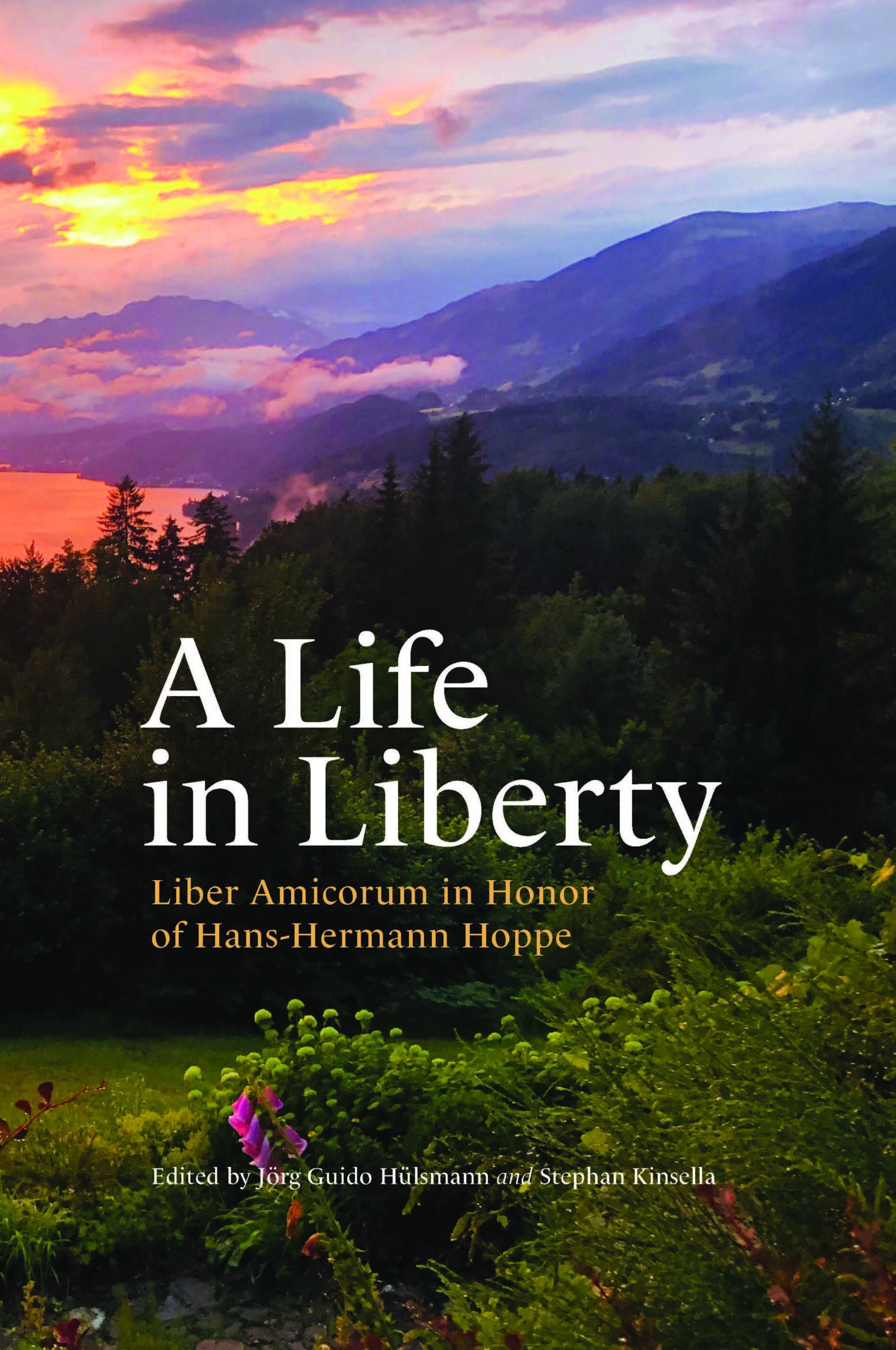
The PFS will publish a collection of tributes to and commentary on Rothbard, on the occasion of his 100th birthday on March 2, 2026, from several longtime PFS members, including many who knew him personally.
The commentary will be published on the PFS website on March 2, and later this year as a small book, Rothbard at 100: A Tribute and Assessment, Stephan Kinsella and Hans-Hermann Hoppe, eds. (forthcoming 2026). Further details here.
“Interview with Hans-Hermann Hoppe, an Anti-Intellectual Intellectual” (pdf), English translation of Hans-Hermann Hoppe: Potret Intelektual Anti-Intelektual (local version), interview (in Indonesian) by Sukasah Syahdan in Akal dan Kehendak (“Reason and Will,” an online weekly Journal on Liberty, Indonesia), Apr. 28, 2008. The English translation is below.
Tom Woods, “Interview with Hans Hoppe,” Tom Woods Elite Letter, Issue #18 (Summer 2025), idem, “The Hans Hoppe Interview Concluded,” Tom Woods Elite Letter, Issue #19 (August 2025). Reprinted with permission. See other biographical pieces in Hoppe Biography.
Tom Woods, “Interview with Hans Hoppe,” Tom Woods Elite Letter, Issue #18 (Summer 2025)
Our good friend Hans-Hermann Hoppe was feeling under the weather for part of July, and that delayed the exclusive interview with him that I wanted to conduct for you. But here it is at last. [continue reading…]
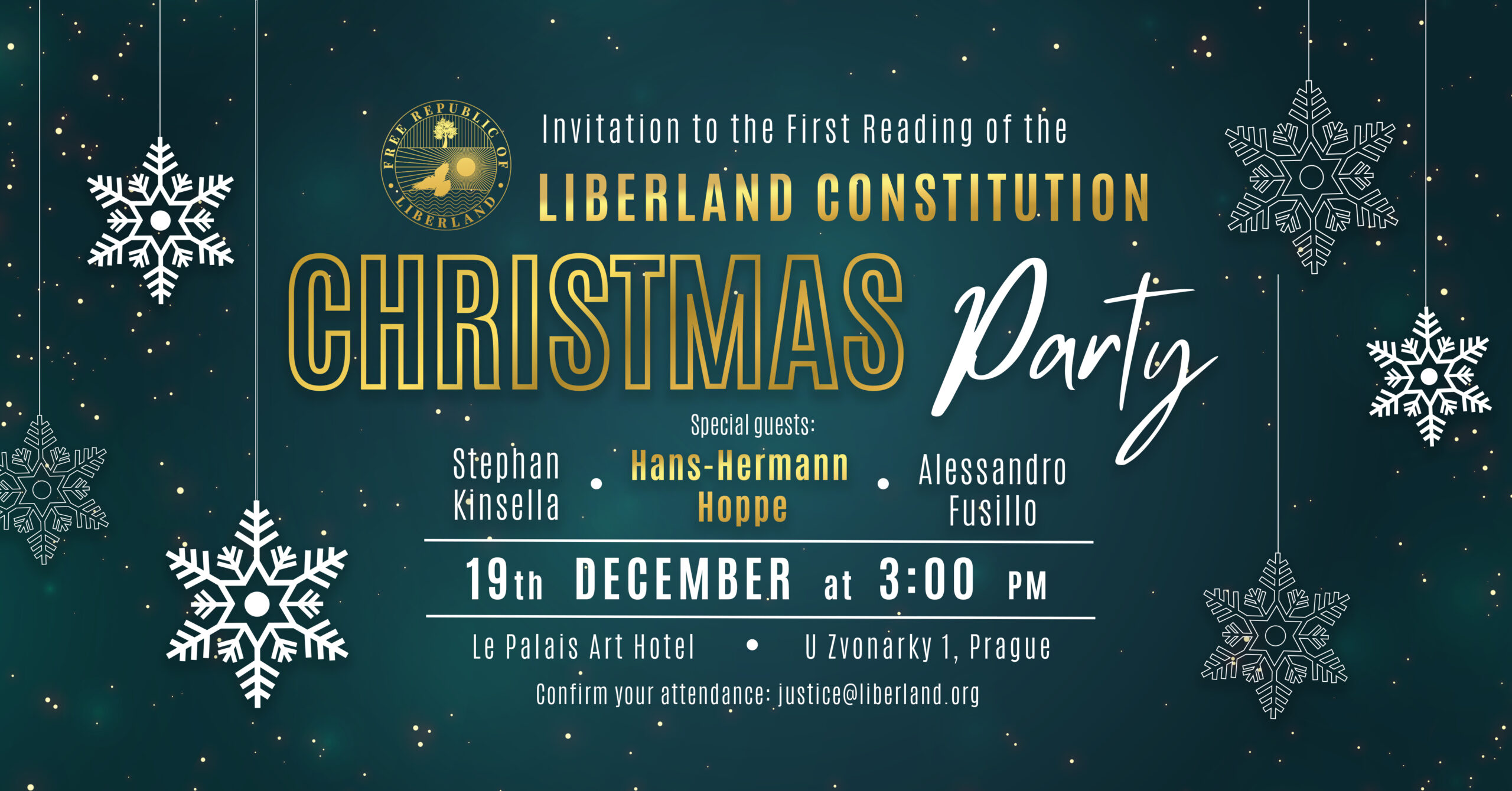
Hans-Hermann Hoppe (Germany/Turkey), StephanKinsella (USA), and Alessandro Fusillo (Italy) were guests and speakers at the Liberland Christmas Party and Constitution Celebration held in Prague at the elegant Le Palais Art Hotel in Prague on 19 Dec. 2025. Invited by long-time PFS member and Liberland President and Founder Vít Jedlička, the gathering featured speeches, presentations, a press conference, and various awards, presentations, and announcements. President Jedlička awarded the Liberland Award of Merit to Professor Hoppe and Mr. Kinsella, and citizenship and passports to Mr. Kinsella and Mr. Fusillo. Photographs from the event may be be found at Prague 2025: Liberland Constitution Celebration: Photos; also Vit’s post at Facebook, my facebook post, and online at google drive (full set) and here (Kinsella set).
Tom Woods, “Interview with Hans Hoppe,” Tom Woods Elite Letter, Issue #18 (Summer 2025), idem, “The Hans Hoppe Interview Concluded,” Tom Woods Elite Letter, Issue #19 (August 2025)
The Pope, the Libertarian, and the Angelic Doctor Walk Into a Bar…
My good friend and host of the No Way Out podcast, Mark McGrath, likes to call me the second-most famous Villanova graduate in Italy. Of course, the most famous one sits on the Throne of St. Peter and has this uncanny penchant for pissing me off.
I had high hopes for Papa Leone, as we call him here in Italy. But time and again, from blessing ice blocks to condemning nation-states for enforcing borders, he’s let me down.
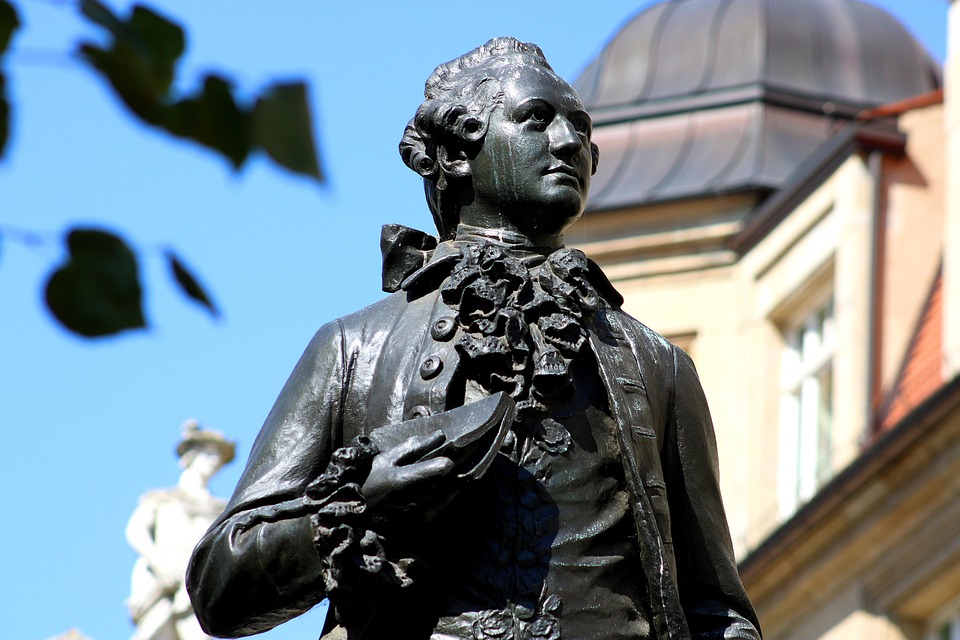
Este año marca el 250.º aniversario del nacimiento de Johann Wolfgang von Goethe. La mayoría de los europeos sabe que fue el más grande de los escritores y poetas alemanes, y una de las figuras colosales de la literatura universal. Menos conocido es que también fue un liberal clásico cabal, defensor del libre comercio y del libre intercambio cultural como claves del bienestar auténtico de las naciones y de una integración internacional pacífica. Además, se opuso firmemente a la expansión, centralización y unificación del poder político, argumentando que tales tendencias solo pueden obstaculizar la prosperidad y el verdadero desarrollo cultural. Por su relevancia en el proceso de construcción europea, me atrevo a nominar a Goethe como el europeo del milenio. [continue reading…]
Law is a social institution independent of the existence of the state. Law explicitly recognizes the principles of justice, which can only be consistently recognized as universal for all times and places. These principles serve not only to deliver justice, but also to judge the justice of the laws applied in any society. The state usurps law by a combination of force and ideology, monopolizing the final say in society and setting itself up as the final judge of all conflicts and crimes, including those involving the state itself. The state thus becomes both judge and party in its own cases.
Professor Hoppe’s monograph Kritik der kausalwissenschaftlichen Sozialforschung: Untersuchungen zur Grundlegung von Soziologie und Ökonomie [Critique of Causal Scientific Social Research: Studies on the Foundation of Sociology and Economics] (Opladen: Westdeutscher Verlag, 1983) has been translated into English by Andreas Tank. This monograph based is the published version of his “Habilitation” thesis, in Sociology and Economics, 1981, from the Goethe-Universität, Frankfurt am Main.
On War, Democratic Peace, and Reeducation:
The “German Experience” in Reactionary Perspective
Hans-Hermann Hoppe
I
All States make war. Indeed, States owe their very origin to war and are the result of war.[1] But there are different sorts of wars. Historically, for instance, there exists the ideal-typical distinction and difference of and between monarchical wars on the one hand and democratic wars on the other.[2][continue reading…]
[27:32] Tom Woods: Some people’s contribution to thought is “woke is bad.” I agree—woke people are hopeless, their arguments baseless. But speculating beyond that isn’t allowed because the range of acceptable opinion is tiny, with “woke is bad” taking up most of it. You and Tucker touched on issues not even well-known enough to be third rails, like democracy’s long-term problems. You made comments, possibly derived from Hans-Hermann Hoppe, about monarchy and democracy’s incentive structures. There’s nothing wrong with discussing this, but it shocked someone. The response was pointing and shouting, no engagement, because we’re dealing with not very bright people on the far-left wing of our movement. How can you live under this system, see how impossible it is to move the needle even when most agree with you, and not question it? You can’t pinpoint who’s to blame or get anyone to listen—they just repeat slogans. What would it take for their brains to switch on?
Hans-Hermann Hoppe is a divisive thinker, though not in the way one might expect. He does not shout, nor does he sermonise. He reasons. And in A Short History of Man: Progress and Decline, published by the Mises Institute, he offers a calm but devastating account of how civilisation was built—and how it is now being dismantled, largely with democratic consent. It is not a cheerful book. But then again, neither is history.
At 113 pages, this is no sprawling chronicle. It is a tightly argued triptych of essays: “On the Origin of Private Property and the Family,” “From the Malthusian Trap to the Industrial Revolution,” and “From Aristocracy to Monarchy to Democracy.” Each follows logically from the last, and each takes aim at a cherished myth of modernity. Progress, Hoppe reminds us, is real. But it is also reversible.
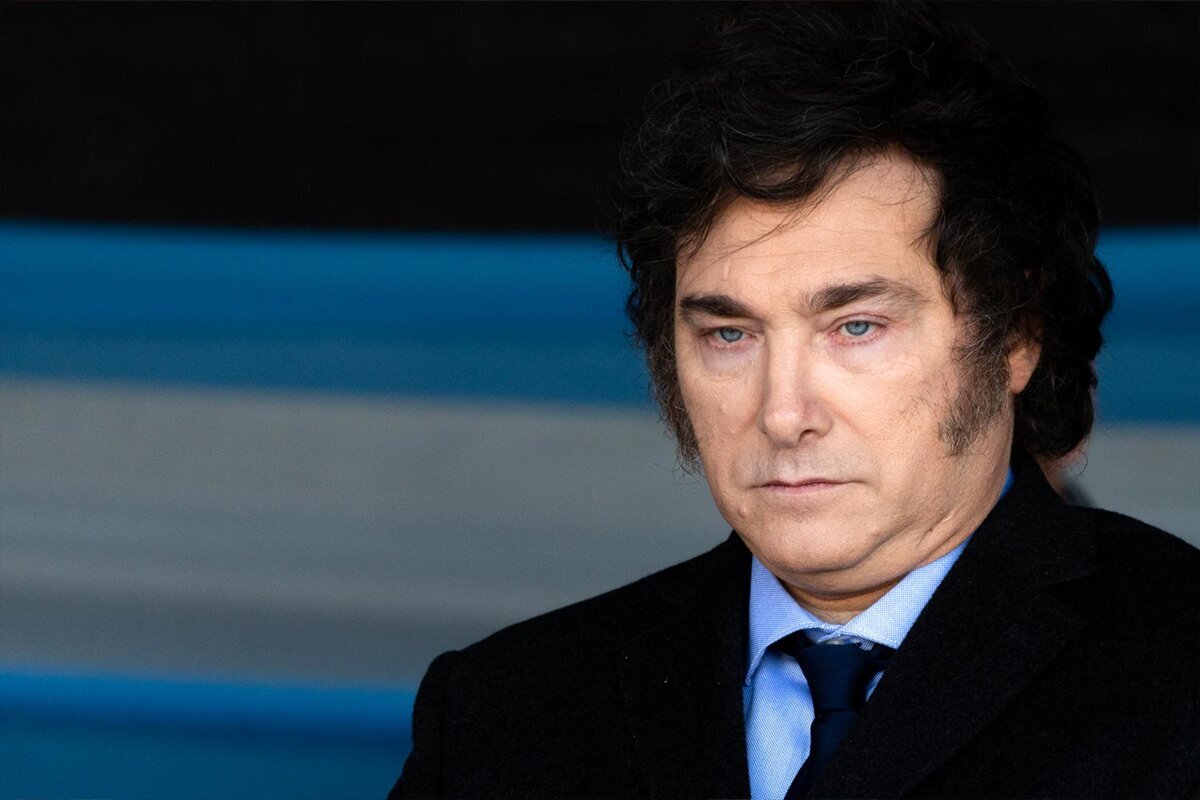
Oscar Grau has translated the resignation of Hans-Hermann Hoppe and other academics from the Scientific Advisory Board of the Ludwig von Mises Institute Germany, due to the recently award announced in favor of the president of Argentina, Javier Milei.
Renuncia al Consejo Asesor Científico del Instituto Ludwig von Mises Alemania
El 13 de julio de 2025, el Prof. Dr. Rolf W. Puster, el Prof. Dr. Jörg Guido Hülsmann y el Prof. Dr. Hans-Hermann Hoppe anunciaron su renuncia al Consejo Asesor Científico del Instituto Ludwig von Mises Alemania. Solo dos de los cinco miembros originales permanecen en dicho Consejo.
A continuación, Puster, Hülsmann y Hoppe explican los motivos de su dimisión. [continue reading…]