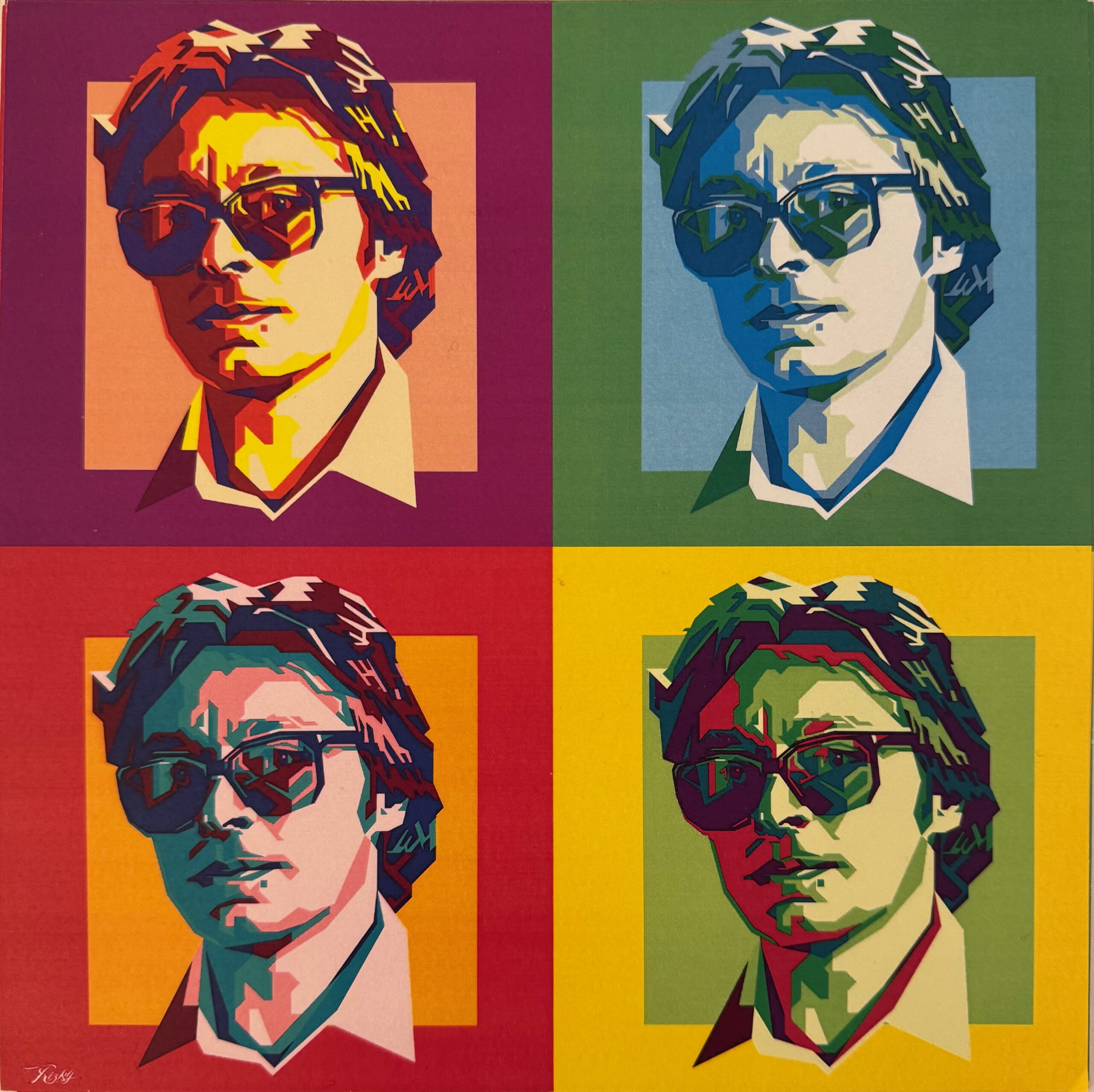
Professor Hoppe’s article, “Entrepreneurship With Fiat Property and Fiat Money,” was published today on LewRockwell.com, and is based on a speech first delivered at the Edelweiss Holdings Symposion held in Zuerich, Switzerland, on September 17, 2011.
Update: Republished in Mises Daily on Nov. 18, 2011.
Professor Hoppe’s article, Why Mises (and not Hayek)? (Oct. 4, 2011), was published in Mises Daily today. It is based on a speech delivered at the Mises Institute Supporters meeting, September 19-23, 2011, Vienna, Austria.
Professor Hoppe taught five classes at the Mises U 2011 in Auburn, Alabama, this past July, including his great speech The Science of Human Action, which kicked off Mises U (his other Mises U 2011 lectures are here). In this speech, Professor Hoppe discusses his intellectual biography and relationship with Rothbard, as well as the Austrian approach and methodology. While he was in town, Jeff Tucker conducted a fascinating interview with him (see video below). In this wide-ranging interview, Professor Hoppe discusses in more detail the history of his intellectual odyssey from leftist to Misesian-Rothbardian, his various books, various topics such as German reintegration, the centralizing effects of constitutions (including the US Constitution and EU), why states with more liberal economies are more imperialist, the interesting and heretofore undisclosed story of exactly how communist policies in East Germany led him to discover Mises, and more.
As announced on B.K. Marcus’s post at the Mises blog today (see below), the Hoppe festschrift that Guido Hülsmann and I edited, Property, Freedom, and Society: Essays in Honor of Hans-Hermann Hoppe (Mises Institute, 2009), which was already available in PDF and print, is now available in a free epub format as well. Kindle and other ebook formats should be available soon. The festschrift was presented to Professor Hoppe, just a month or so before his 60th birthday, at a private ceremony on July 29, 2009, in Auburn, AL during Mises University 2009 (see Hoppe Festschrift Published). Pictures from the ceremony are embedded below.
Property, Freedom, and Society: Marzipan in Honor of Hans-Hermann Hoppe
Also, as I noted in Book Review of Hoppe Festschrift, David Howden wrote an excellent review of the festschrift in New Perspectives on Political Economy. And, as I noted in that post, and in Bodrum Days and Nights: The Fifth Annual Meeting of the Property and Freedom Society: A Partial Report, as a piece of Festschrift trivia: at the recent Property and Freedom Society conference in Bodrum, Turkey, a guest presented a festschrift-cake he had had made in Estonia, entitled “Property, Freedom, and Society: Marzipan in Honor of Hans-Hermann Hoppe,” which was served as part of the dessert at the closing banquet.
In the magnificent Peter Sellers film, The Mouse That Roared, the strangely English-speaking Duchy of Grand Fenwick, a tiny nation between France and Switzerland, defeats the United States in a rather bizarre nuclear stand-off.
Will another such Duchy, the tiny Italian town of Filettino, similarly defeat the horrible coerced agglomeration known as Italy, inside the even more horrible coerced agglomeration known as the European Union?
We can but hope.
For Filettino has declared its independence from Rome, in a bid to emulate San Marino, Monaco, the Vatican City, and Andorra (and I suppose the Cantons of Switzerland itself, when they shook off the First Reich of the mass murderer Charlemagne, and his rotten Holy Roman Empire).
Obviously, we will see if Filettino’s independence lasts, or if it is just another political stunt, but it is an interesting event to witness nevertheless. For when in the future we look back from ‘Hoppe World’ and work out how we got there, historians will regard such incidents as being symptomatic of a wider terminal malaise of coerced collectivism:
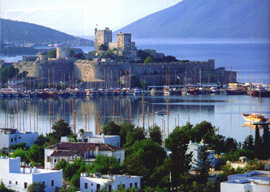
I spent the Memorial Day weekend as a guest of Professor Hans-Hermann Hoppe’s Property and Freedom Society at their annual conference in Bodrum, Turkey. It was a wonderfully relaxing break, for which I am very much obliged to the good professor, his charming wife, and their co-organizers. I gave a talk about China and got to see some of Turkey (a country that was new to me), and I listened to some interesting and instructive lectures.
The PFS exists to help promote the economic and political libertarianism of Ludwig von Mises and Murray Rothbard. I was in Bodrum because Prof. Hoppe was kind enough to invite me, not because I am a particularly dogmatic disciple of those gents. I approve of them and their doctrines in a vague, general sort of way, as I approve of anything much to the right of the statist elephantiasis dominant in the modern West and which looks to be sailing into some great crisis in the near future.
On the other hand I have issues with libertarianism—with free trade, for instance, and with the open-borders dogma that too many libertarians (though not all the ones at Bodrum, perhaps not even a majority) cling to with religious zeal.
In light of the furore arising from my appointment as editor-in-chief of the Australian economics organisation, Economics.org.au, it was decided that I travel as far away from Australia as I could until the media frenzy subsided. I was philosophical about this, figuring that having reached the pinnacle of the Australian economics profession with my appointment, the only challenges left for me were abroad anyway. So, in my new capacity as senior foreign correspondent for Economics.org.au, I attended the 6th Annual Property and Freedom Society (PFS) Conference in Bodrum, Turkey.
The significance of the conference being in Turkey cannot be understated. There was a gaudy Turkish election campaign of some sort playing out during the conference, and big clunky polluting vehicles were driven around the poorly-maintained and traffic-clogged streets with loud songs and speeches advertising the candidates. Imagine an ice cream van that went three times as fast, emitted noise almost as irritating as “Greensleeves” and offered something people had to be forced to fund. Pedestrians were treated like taxpayers. Despite not understanding the language that the election profundities were in — I was the only conference participant who was not at least bilingual —, they were still just as comprehensible to me as the confabulations of English-speaking politicians.[continue reading…]
Being a man who claims to be the hardest hard-core Rothbardian in England, (and it’s pistols at dawn in the mist for anyone who wishes to argue the point), I feel I was last inside the bubble of civilization two years ago, when I was lucky enough to be invited to Professor Hans-Hermann Hoppe’s Property and Freedom Society conference, held in 2009. The two years since, inside the asylum, have passed in a hilarious blur as various pin-headed identikit Labservatives or Conliberals jaw-boned at each other (at my expense) about how different they are from each other, because some like pink dots on their blue ties while others prefer yellow dots on their pink ties.
Oh, how Jonathan Swift so beautifully captured the futility of anyone believing in the usefulness of politicians with his immortal book, Gulliver’s Travels, and his description of the ropedancers: [continue reading…]


 I spent the Memorial Day weekend as a guest of Professor Hans-Hermann Hoppe’s